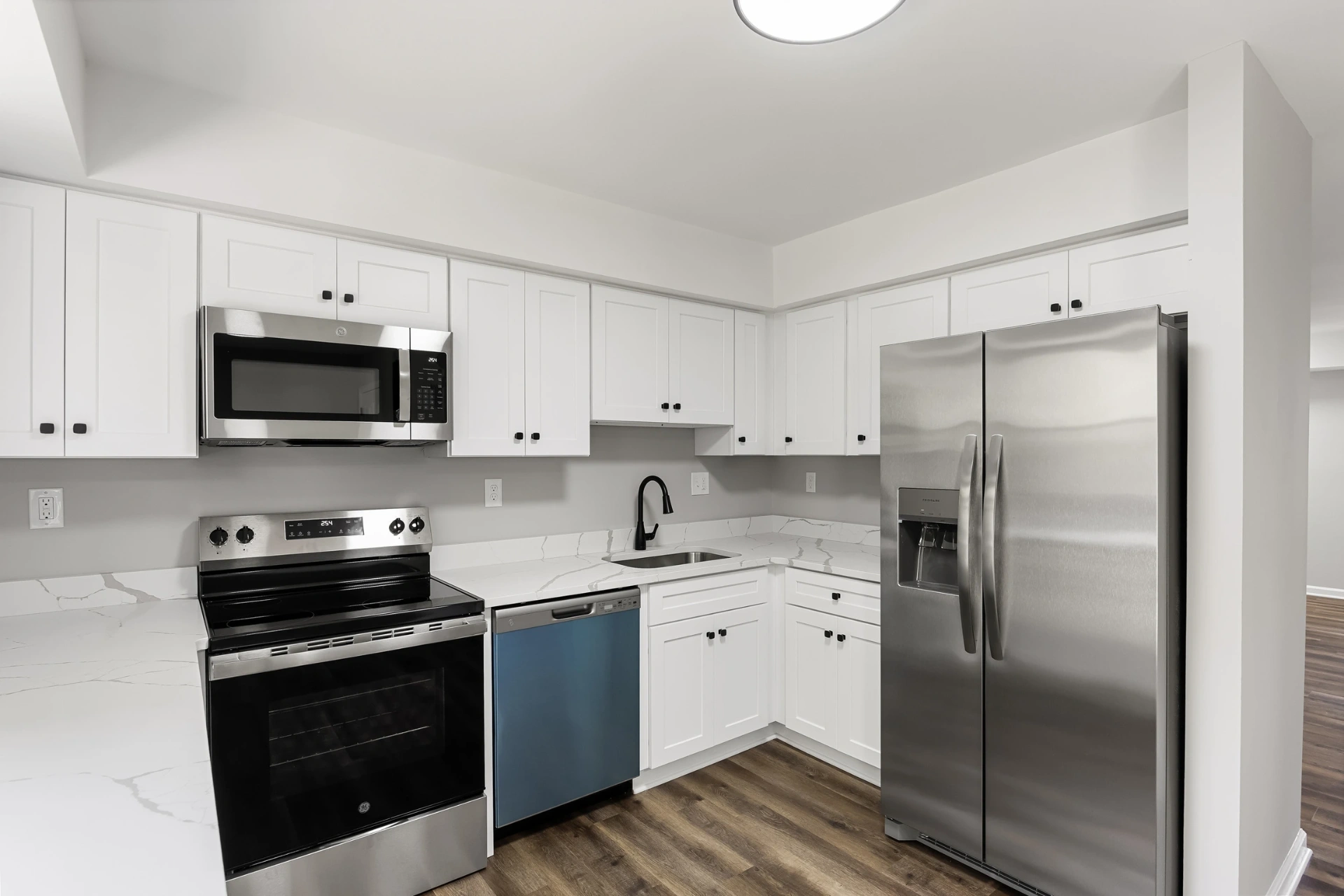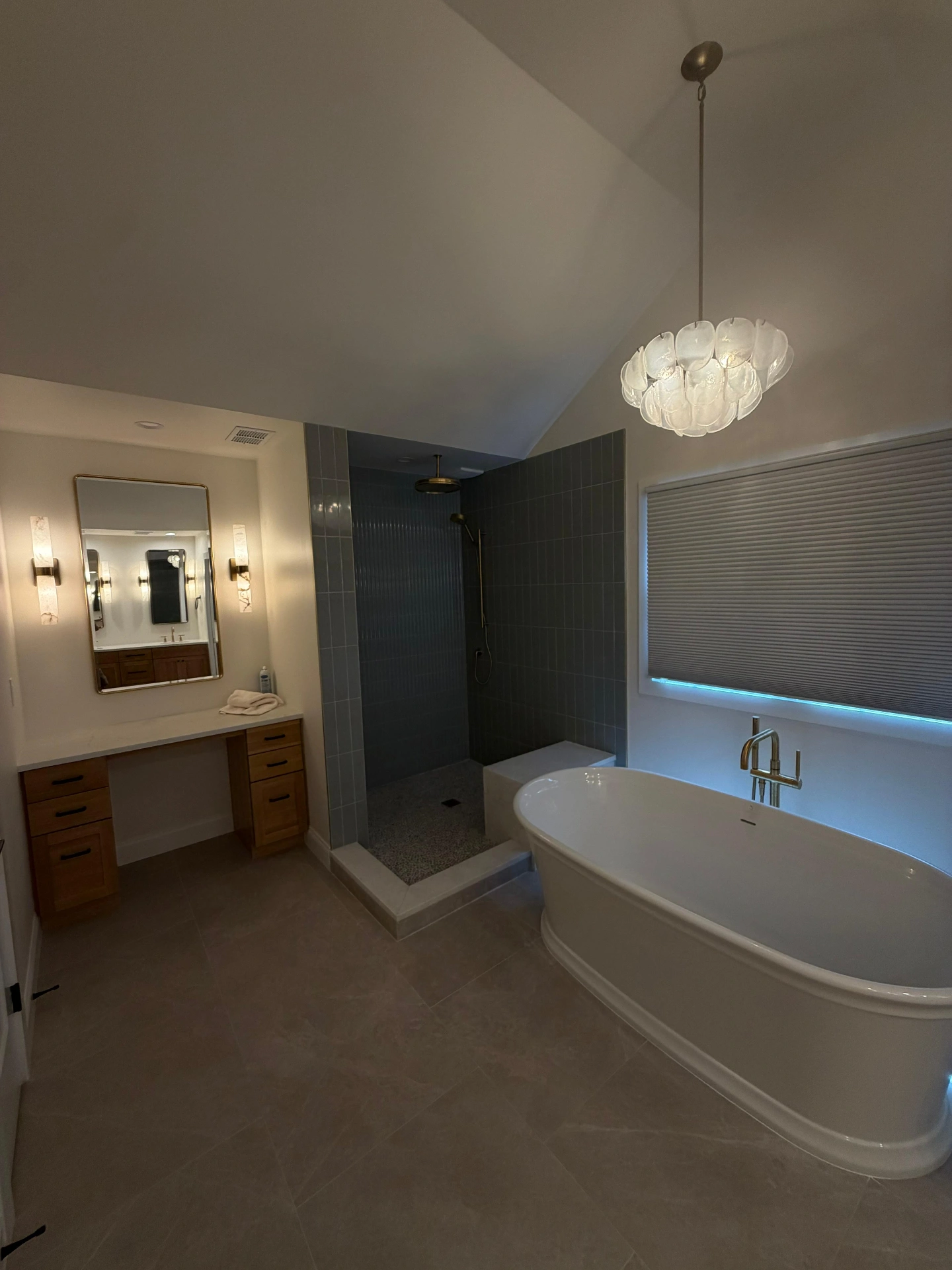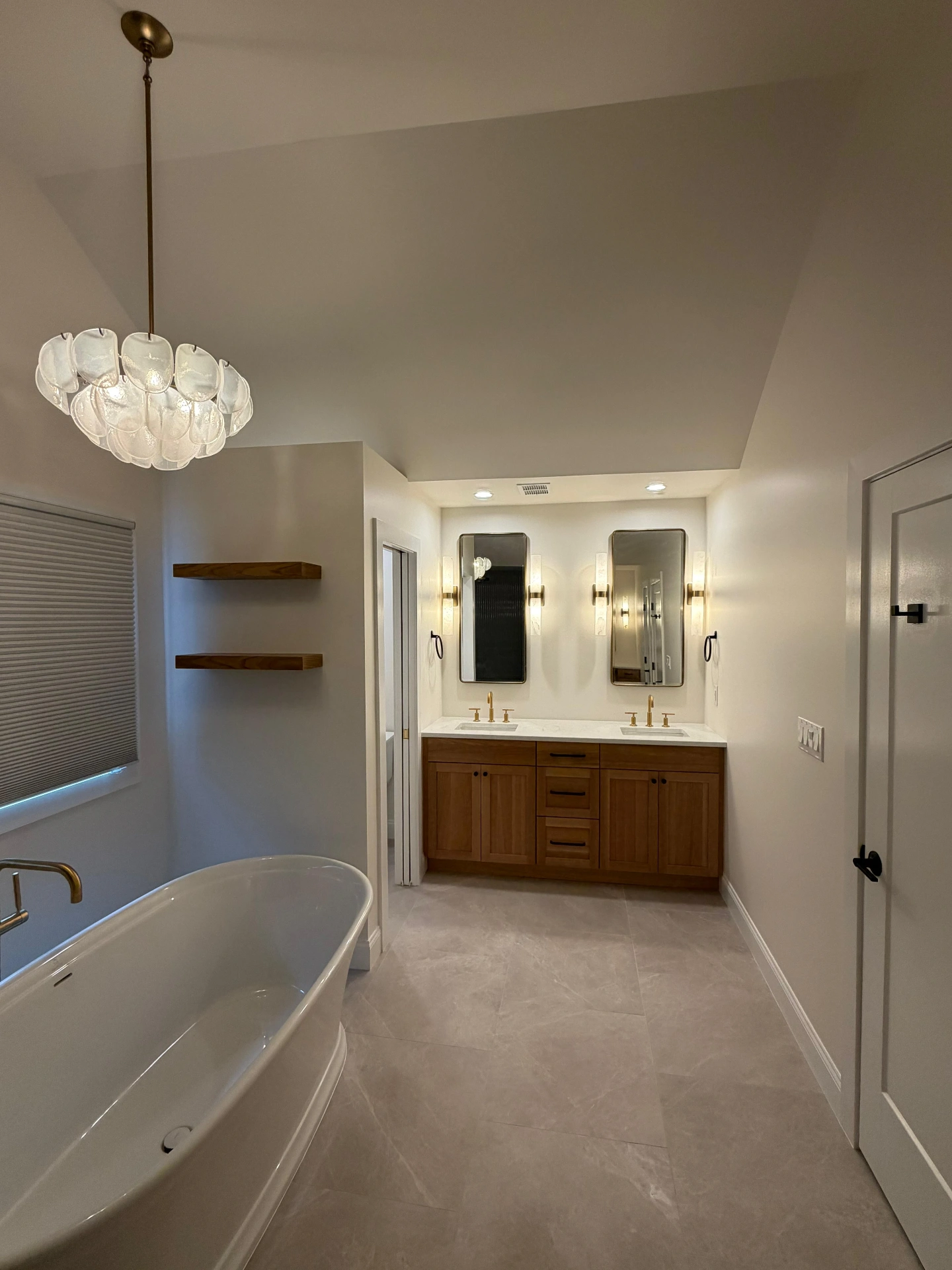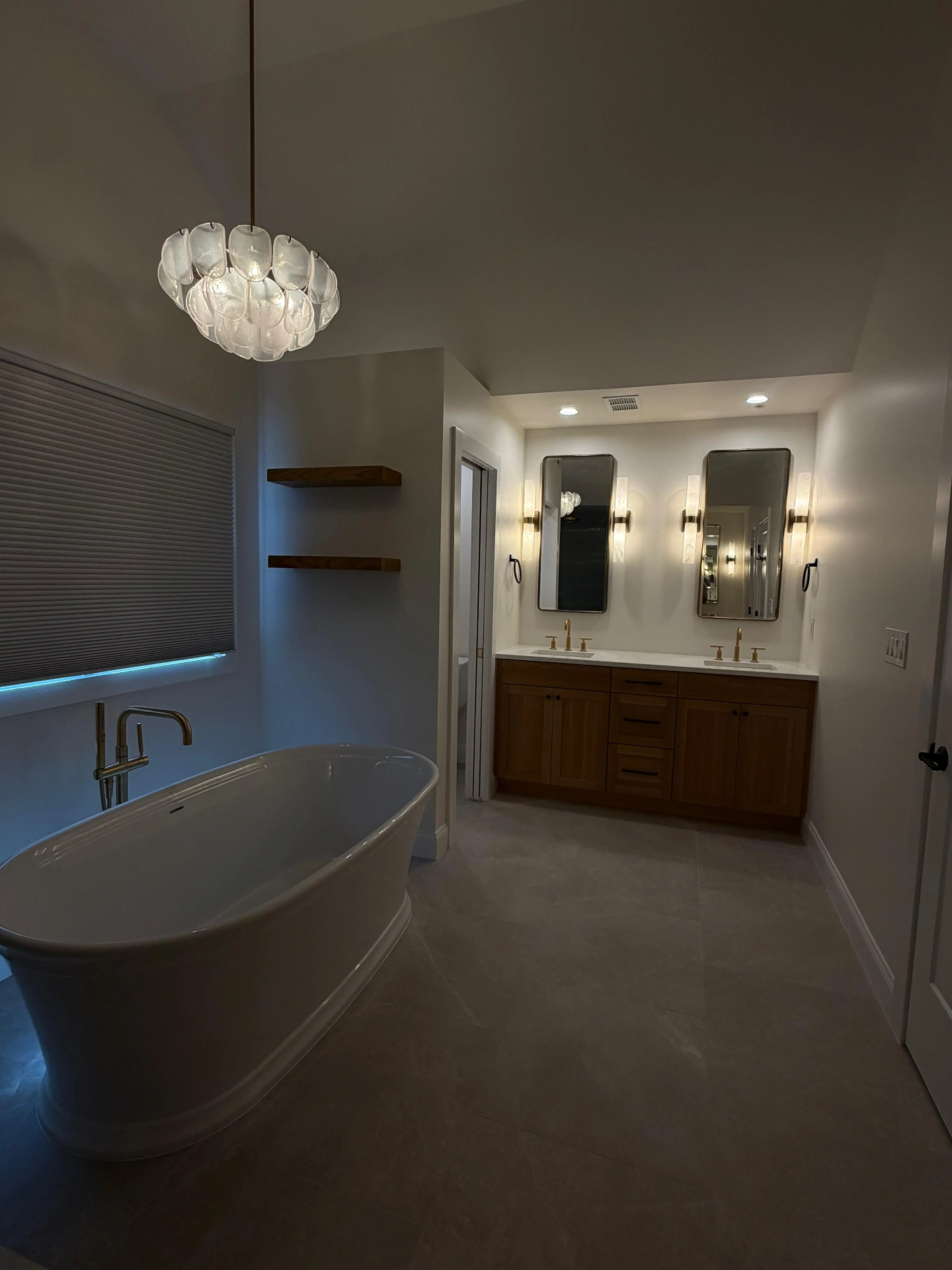
A whole-home renovation is the most expensive, most disruptive and most rewarding project a homeowner takes on. It is also the project where the gap between a great contractor and a bad one is widest. A kitchen renovation that goes sideways is a four-month problem. A whole-home renovation that goes sideways is a two-year problem with your equity inside it.
This guide is the framework we use on every whole-home project, from a 1990s Doylestown colonial brought up to current taste, to a Main Line Tudor brought back to its bones, to a Cherry Hill split-level reimagined as a contemporary open plan. By the end you will know what a real whole-home renovation costs in our region in 2026, the sequencing that keeps the schedule from collapsing, the contract terms that protect you, and the honest reality of living through it.
What a whole-home renovation actually costs in 2026
A whole-home renovation in the PA suburbs, South Jersey and Delaware in 2026 typically runs:
| Scope | Square Footage | 2026 Cost |
|---|---|---|
| Cosmetic refresh (paint, floors, kitchen, baths, no structural) | 2,500 to 3,500 sqft | $325,000 to $625,000 |
| Heavy renovation (structural changes, all systems, all rooms) | 3,000 to 4,500 sqft | $625,000 to $1.4M |
| Down-to-studs gut renovation | 3,500 to 5,000 sqft | $1.1M to $2.5M |
| Renovation plus addition | varies | adds $475 to $725 per added sqft |
That is a wide range because whole-home scope is genuinely wide. A useful rule of thumb in our region in 2026: a real renovation that touches every room and updates every system runs roughly $225 to $475 per square foot, depending on finish level. Cosmetic refresh comes in below that range, gut renovation pushes above it. Additions price separately and typically run $475 to $725 per added sqft, before any site work.
These numbers assume real materials and trades, not a national-average flip-house build. A whole-home renovation that hits the lower end of these ranges with luxury finishes is either subsidized labor or missing scope.
The "renovate or move" decision, with the actual math
Many of our whole-home clients spend six months debating whether to renovate the house they own or buy a different one. The honest math we walk through:
The cost to move a comparable home in our region in 2026: typically 8 to 10 percent of the new home's price (realtor commissions, transfer tax, moving costs, light renovation of the new house). On a $1.5M home, that is $120,000 to $150,000 of money that goes to nothing tangible.
The cost to renovate the home you already own to the standard you would want: typically 20 to 35 percent of current home value for a meaningful renovation. On a $1.2M home, that is $240,000 to $420,000.
Renovating costs more in cash. Moving costs more in friction, lost time, and the fact that the new house also needs work. The decision usually comes down to two questions: do you love the bones of your house, and do you love the neighborhood. If both answers are yes, renovating almost always wins. If either is no, move.
Scope: get clear before the design
The single most expensive mistake in whole-home renovations is fuzzy scope at the design stage. A homeowner who says "let us figure it out as we go" pays 25 percent more than a homeowner who arrives with a list. The list does not have to be sophisticated, but it needs to exist.
A useful scope-setting exercise we walk clients through:
- List every room. For each, write one of: keep, refresh, renovate, gut. Be honest. A "refresh" that becomes a "renovate" mid-project is a budget event.
- List every system: electrical, plumbing, HVAC, roof, windows, insulation, exterior. For each, write: keep, partial, full replacement. Houses built before 1985 usually need at least partial on every system. Houses built before 1955 usually need full on most.
- List every structural change: walls removed, walls added, additions, second story. Each is a separate engineering conversation.
- List every "while we are at it" item: closet build-outs, mudroom, basement, outdoor space. These are the items that get added in week 12 and add $80,000 to the contract. Decide upfront whether they are in or out.
When the scope is set on paper, the design and contract conversations get clean. When it is not, every meeting is a renegotiation.
Sequencing: the order that actually works
A whole-home renovation has hundreds of trades and dozens of inspections that have to happen in the right order. The sequencing is what separates a project that finishes in 10 months from one that drags into 18.
The macro sequence we use:
- Months 1 to 3: Design and engineering. Architectural drawings, structural engineering, mechanical engineering, selections, permit submittal.
- Months 3 to 4: Permits and procurement. Permits typically take 4 to 12 weeks depending on township. During this window we order long-lead items: cabinets (8 to 20 weeks), windows (8 to 16 weeks), stone (variable), appliances (1 to 6 weeks), specialty fixtures.
- Month 4: Demo and structural. Remove what is leaving, frame what is being added or moved, install structural steel and headers, expose all systems.
- Months 5 to 6: Rough mechanical, electrical, plumbing, HVAC. Run everything new, get rough inspections, insulate, hang drywall.
- Month 7: Finish drywall, paint primer, trim package, hardwood floor install (unfinished). Floors get protected and the rest of the project works around them.
- Months 7 to 9: Finishes. Kitchen install, bath install, tile, stone, plumbing fixtures, electrical trim, cabinetry, hardware.
- Months 9 to 10: Floor finishing, paint, exterior, punch. Refinish floors in stages, final paint, exterior touch-ups, two rounds of punch list.
A real whole-home renovation in our region in 2026 runs 9 to 14 months of construction, plus 2 to 4 months of design and permitting before that. Anyone who quotes you 6 months for a real whole-home build is either lying or planning to subcontract poorly.
Contract: the document that decides whether you get hurt
Most renovation horror stories trace to a vague contract. A few terms worth fighting for in a whole-home contract:
Fixed-bid or guaranteed maximum price (GMP). Avoid time-and-materials contracts on whole-home projects unless you are working with a long-standing contractor on a small scope. Cost-plus with a guaranteed maximum is the next-best alternative. Open-ended T&M on a $1M+ project is how budgets become $1.6M projects.
Itemized scope and allowance schedule. Every line item priced. Every allowance (tile, lighting, plumbing fixtures, appliances) set at realistic levels based on the actual finish you want, not a fictional low number to get the headline price down.
Defined contingency. A whole-home renovation in older housing stock needs an 8 to 15 percent contingency for unknowns. The contract should state the contingency, what it covers, and how it gets approved.
Change order process. Every change in writing, priced before work proceeds, signed by you. Email approval is not a change order.
Payment schedule tied to milestones. Pay against work completed, not against the calendar. Common milestones: deposit at signing, demo complete, rough inspections passed, drywall complete, finishes 50 percent installed, substantial completion (with 10 percent retainage), final walkthrough.
Definition of substantial completion. This is the moment when the house is occupiable. The contract should define it precisely. Without a definition, "substantial completion" becomes a negotiation that benefits whoever has the leverage.
Warranty. One year on workmanship at minimum is standard. Two is better. Manufacturer warranties on the products pass through directly.
Living through it: the honest reality
Many whole-home renovations involve the family living offsite for at least part of the project. The honest reality of trying to live in the house through it:
- Cosmetic refresh: Manageable to live in. Plan on 4 to 6 weeks where the kitchen is unusable.
- Heavy renovation: Most families move out for at least 4 to 6 months. The dust, the noise, the schedule of trades arriving at 7 AM five days a week makes daily life difficult.
- Down-to-studs gut: Move out for the duration. There is no living in a house with no walls and no systems.
- Renovation plus addition: Depending on phasing, often livable. The addition is built first, then the family moves into it while the original house is renovated.
A practical rental budget to plan for: $4,500 to $9,000 per month for a comparable rental in our region, for the duration of the inhabitable period. Add this to the renovation budget, not as an afterthought.
The team you actually need
A whole-home renovation involves more than a contractor. The team typically includes:
- General contractor. Runs the project, owns the schedule, holds the contracts with all trades.
- Architect or designer. Produces the drawings, owns the design vision.
- Structural engineer. Sizes beams, designs lateral support, signs and seals drawings for permit.
- Interior designer (optional but common). Owns finish selections, fixture selections, lighting plan.
- Kitchen and bath designer. Owns cabinetry, layout, appliance specification.
The right contracting structure depends on the project. Design-build (one firm runs design and construction) shortens the timeline by 2 to 4 months and tightens accountability. Architect-first (separate design firm, then bid construction) gives more design exploration and competitive bidding but adds time and friction.
For most clients in our service area, design-build is the right answer. The exception is a heavy architectural project with significant exterior changes, where an architect-led process delivers better design.
How to vet a contractor for a whole-home project
We have written about the 12 questions in a future post in this series, but the short list:
- Show me three whole-home projects you completed in the last three years, and let me call all three owners. Anyone who hedges on this is not the right contractor for this scope.
- What is your insurance coverage and bonding capacity? A whole-home project should have a contractor carrying at least $2M of general liability and full workers' comp.
- Walk me through how change orders, contingency draws, and unforeseen conditions are handled. The answer should be unhesitating and specific.
- Who is on site every day, and how often does the principal walk the project? "The foreman, daily; I walk it twice a week" is a real answer. "We have a great team" is a non-answer.
- Show me your last three change order logs with explanations. A real contractor has them.
A whole-home renovation in our region is a major life event and a major capital event. It is worth the time it takes to get the team right before you sign anything.
A1 Brothers runs whole-home renovations across Bucks, Montgomery, Camden and New Castle counties, and at the Jersey Shore and Delaware beaches. The framework in this guide is the same one we apply to every project. If you are weighing a whole-home renovation, the consultation is the right first step.
Frequently Asked Questions
Questions buyers actually ask
What does a whole-home renovation cost in 2026?+
A real whole-home renovation in the PA suburbs, South Jersey or Delaware in 2026 typically runs $225 to $475 per square foot, depending on finish level and structural scope. A typical 3,500 sqft renovation lands between $625,000 and $1.4M. Down-to-studs gut renovations push above that range, and additions add $475 to $725 per added sqft.
How long does a whole-home renovation take?+
A real whole-home renovation runs 9 to 14 months of construction, plus 2 to 4 months of design, engineering and permitting before construction starts. Total project timeline from first conversation to move-back-in is typically 12 to 18 months.
Should I renovate or move?+
Move if you no longer love the bones of the house or the neighborhood. Renovate if you love both. Financially, moving costs 8 to 10 percent of the new home's price in friction (commissions, transfer tax, moving, work needed on the new place). Renovating costs more in cash but more is going into your house rather than to closing fees.
Can I live in my house during a whole-home renovation?+
For a cosmetic refresh, often yes, with a 4 to 6 week unusable-kitchen window. For a heavy renovation, plan on moving out for 4 to 6 months. For a down-to-studs gut, plan on moving out for the duration. Budget $4,500 to $9,000 per month for comparable rental.
What kind of contract should I sign for a whole-home renovation?+
A fixed-bid contract or a cost-plus contract with a guaranteed maximum price. Avoid open-ended time-and-materials contracts on whole-home projects. The contract should include itemized scope, realistic allowances, a defined contingency line, a written change order process, milestone-based payments and a clear definition of substantial completion.
Is design-build or architect-first better for a whole-home renovation?+
Design-build is the right answer for most whole-home renovations in our region. It shortens the timeline by 2 to 4 months and gives one firm accountability for both design and construction. Architect-first is the right choice for heavy architectural projects with significant exterior changes, where design exploration matters more than schedule.
Written by
A1 Brothers
Founders and Lead Builders
Two brothers, twelve-plus years of luxury remodeling across the Pennsylvania suburbs, South Jersey, the Jersey Shore and Delaware. Every word in this library is written from the lived experience of running 300+ projects from concept to handover.
Family-operated · Licensed and insured
Planning your project
Ready to plan your project properly?
We will walk the space, talk through what you actually want, and give you an honest plan you can hold us to. No pressure, no scripts.
Get an estimate