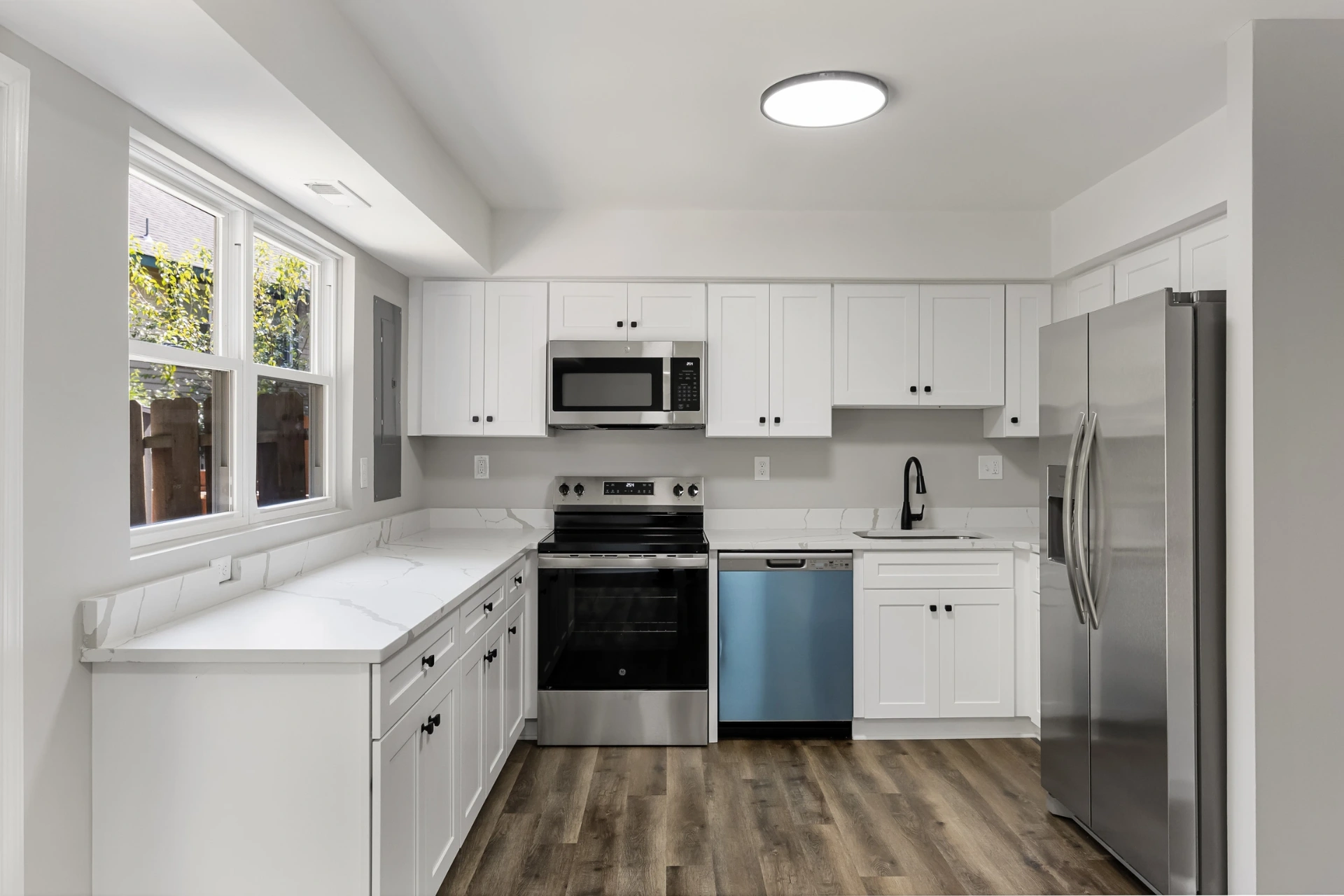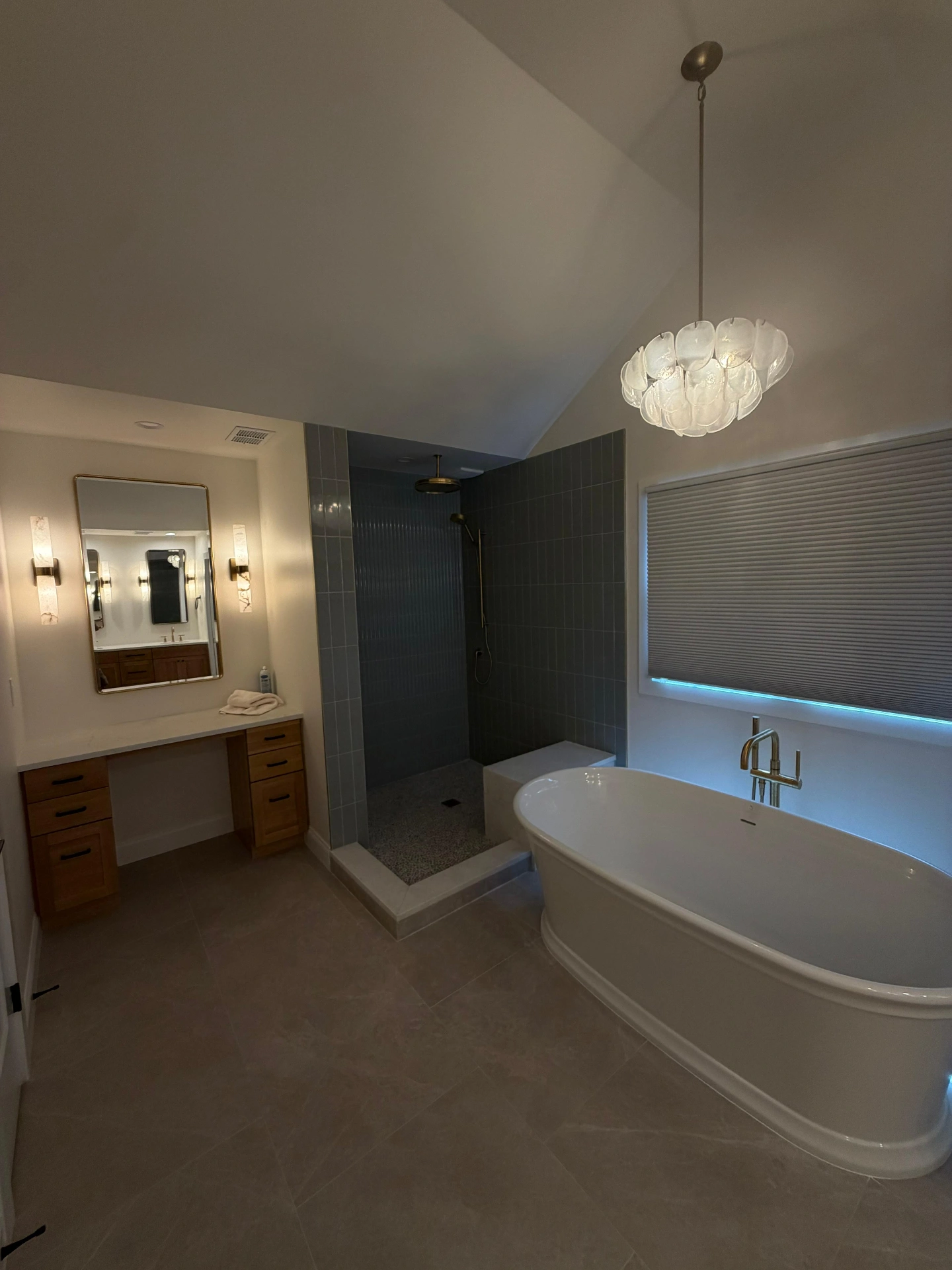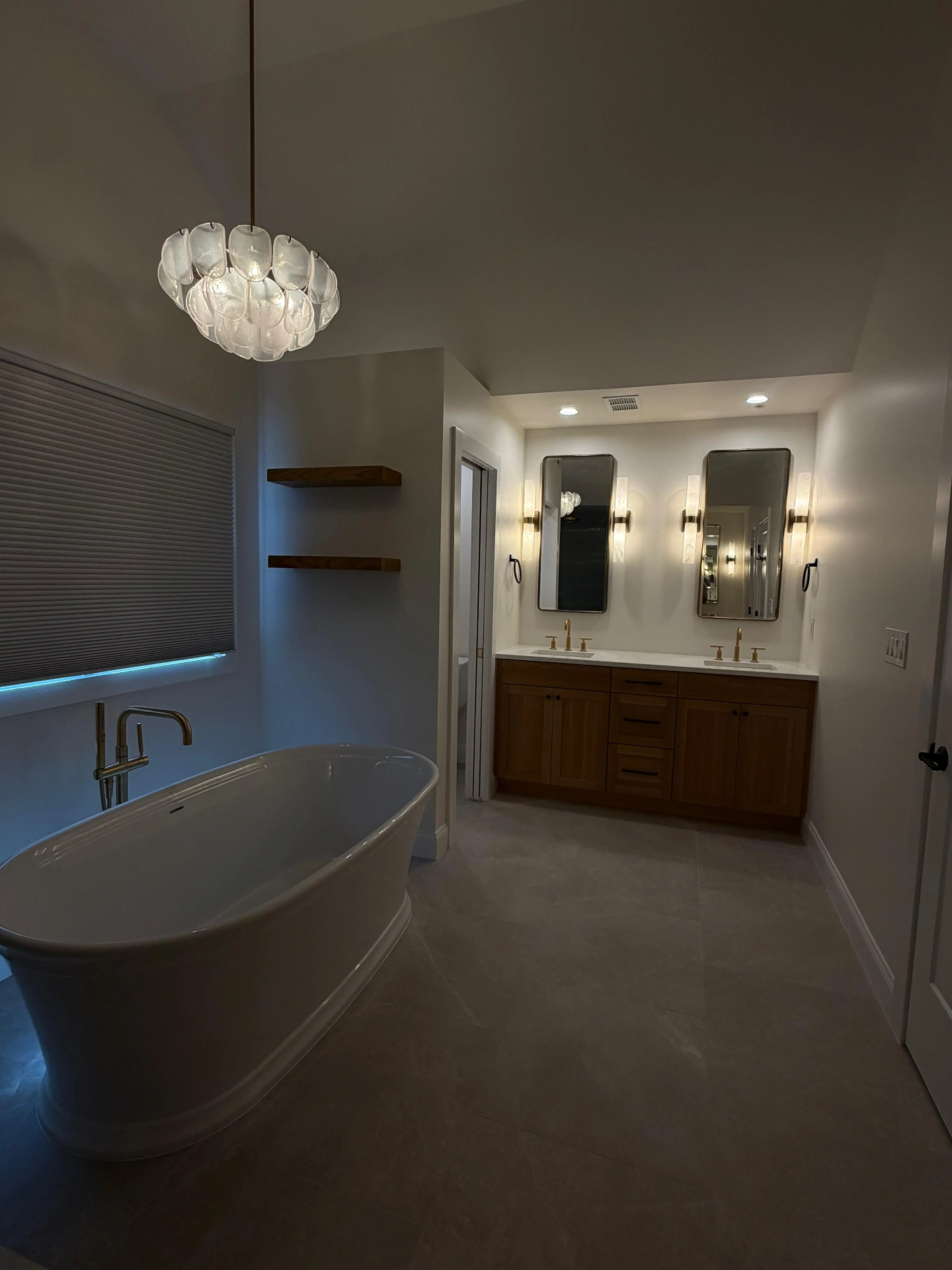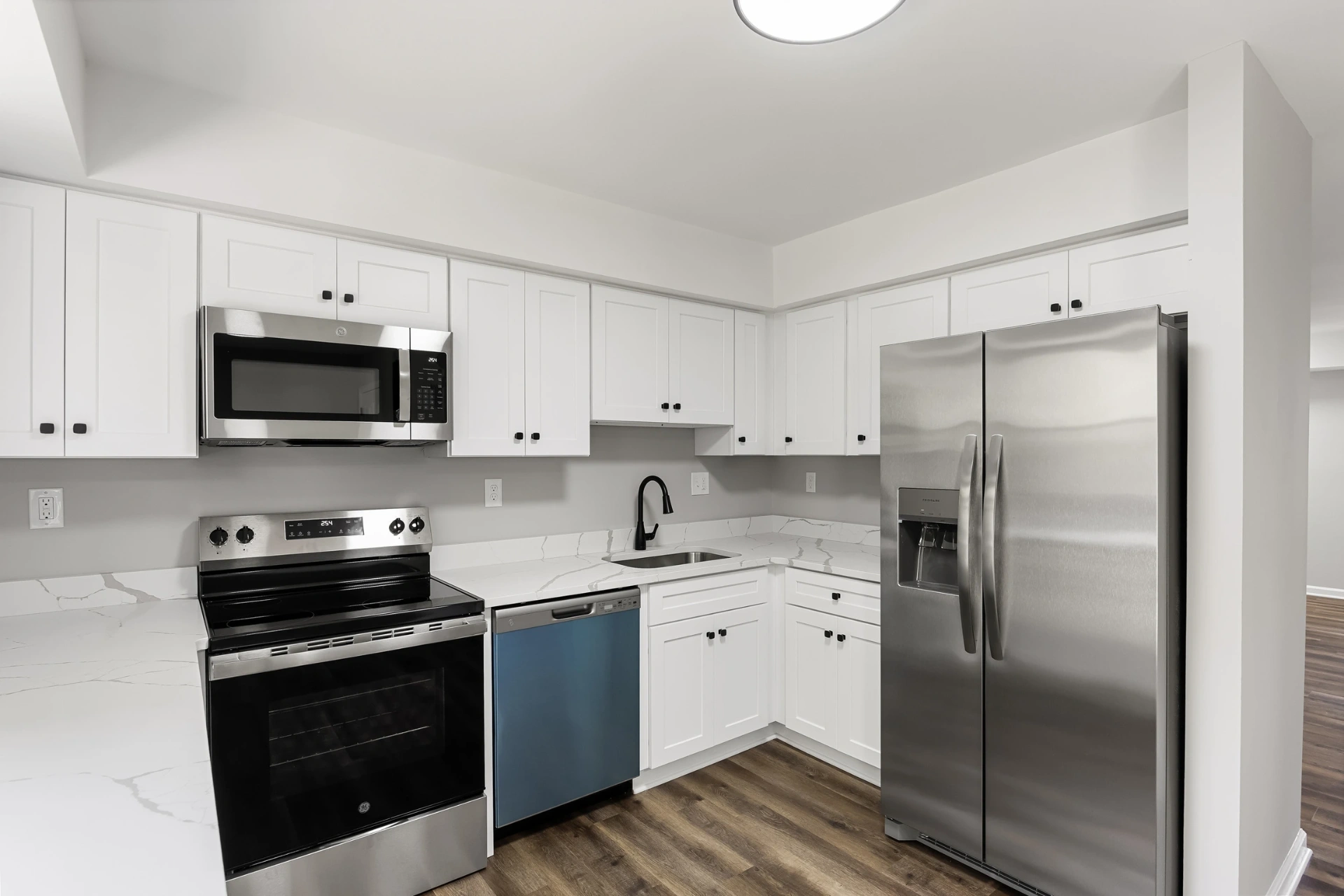
Most people start a kitchen remodel hoping to avoid two things. They do not want to spend money on the wrong stuff, and they do not want to end up in one of the horror stories their neighbor tells at dinner parties. The good news: both are avoidable. The bad news: they are only avoidable if you decide a few things up front, in the right order, before anyone touches a hammer.
This is the guide we wish every client read before their first showroom visit. By the end of it you will know how a luxury kitchen actually gets built across the PA suburbs, South Jersey and Delaware in 2026, what the budget really goes to, the layout decisions that quietly shape your life for the next twenty years, and the small list of things that separate a project that lands clean from one that drags into a renovation horror story.
What "luxury" actually means in 2026
In our region, a luxury kitchen is not defined by a price tag, it is defined by four things working together.
- Cabinetry that survives twenty-five years. Plywood boxes, solid wood doors, dovetail drawers, soft-close hardware, finishes that hold up against sun and steam.
- Real working appliances, sized and vented for the way you actually cook, not the way a showroom photograph implies you cook.
- A layout you would still draw the same way after a year of use. The expensive layouts are the ones you fix later.
- A finish level that matches the rest of the house, so the kitchen does not feel like a transplant from a different home.
A kitchen that delivers all four can range from $95,000 to over $300,000 depending on size, structural complexity and material choices. The price difference between a beautiful $150,000 kitchen and a beautiful $250,000 kitchen is almost never craftsmanship, it is materials and appliances. We have written a deeper Bucks County cost breakdown that walks through where every dollar goes.
The decision order that protects you
Most projects go sideways because decisions are made in the wrong sequence. Here is the order that actually works.
1. Lifestyle audit before layout
Before any designer draws a single island, answer these on paper: How many people cook at once on a weekday? How often do you entertain? Do you bake? Is this a "morning coffee" kitchen or a "Friday night dinner party" kitchen, or both? Two-cook households need two sinks and circulation lanes. Bakers need a marble landing zone and a counter that can take a stand mixer. The honest answers to these questions point to your layout faster than any Pinterest board.
2. Layout before materials
The cheapest mistake to fix is the one that has not been built yet. Spend real time at the plan stage. We typically walk a client through three layout options with the appliance package overlaid, and we do not move to material selection until one layout is signed off.
3. Cabinetry and appliance package together
Cabinets and appliances are dimensional. Pick the range first if it is a 48-inch Wolf, then the hood, then the fridge, then plan cabinet runs around them. Picking cabinets before appliances forces the cabinet shop into awkward fillers and oversized panels.
4. Stone, tile, finish
Stone slab selection has to happen before fabrication can be scheduled, which means before demo if you want a clean schedule. Tile and paint can be later, but never within the last three weeks of the project, because that is when supply chain gaps will hurt you.
Layout principles that age well
Trends will tell you that L-shaped islands with bar seating are over, or that broken-plan kitchens are the new open concept. Ignore the noise. Three principles age better than any trend.
Triangle still matters. The sink, range and refrigerator triangle should have a combined leg length under 26 feet. Longer than that and the kitchen feels like a hike, especially in larger Main Line and Yardley homes where the footprint allows the triangle to drift.
Counter zones beat counter quantity. Forty linear feet of counter with no thought behind it is worse than twenty-eight linear feet broken into prep, landing, cleanup and serving zones. Each zone needs at least 36 inches of clear counter.
The island is a room, not a feature. Treat the island like a second room with its own purpose. If it is a prep island, plan a prep sink and a butcher block insert. If it is a seating island, do not stuff it with appliances that force the seated person to lean over a vent. Most failed islands try to do four things and do none well.
Cabinetry, in plain English
A luxury kitchen lives or dies on its cabinetry. The spec sheet is more useful than the brochure.
| Spec | Acceptable | Premium | Avoid |
|---|---|---|---|
| Box construction | 5/8 inch plywood | 3/4 inch furniture-grade plywood | Particleboard or MDF boxes |
| Drawer | Dovetail solid wood | Dovetail solid wood, full extension | Stapled or doweled |
| Glides | Blum soft-close | Blum or Hettich, undermount, 100 lb | Side-mount ball bearing |
| Hinges | Blum soft-close 6-way | Blum or Hettich, integrated soft-close | Surface mount, basic |
| Finish | Conversion varnish | Catalyzed lacquer or polyester | Standard nitrocellulose lacquer |
Custom is not always the answer. A well-built semi-custom line, properly specified, will outlast the marriage that ordered it. Custom is necessary when the layout requires non-standard widths, unique heights, or a specific door style that semi-custom does not offer.
Appliances without prestige tax
The luxury appliance market has trained buyers to over-spec. Here is what twelve years of installs has taught us.
- A 48-inch range is only worth it if you cook with four burners going regularly. A 36-inch range covers most luxury homes and frees wall space for a real pantry or a second oven.
- Built-in refrigeration looks beautiful but adds $5,000 to $10,000 over a counter-depth standalone. That is real money. Decide based on the sightline, not the brochure.
- Ventilation is non-negotiable. A 1200 CFM externally vented hood is the difference between a clean kitchen and a kitchen that smells like every dinner you have ever cooked. Recirculating hoods are a compromise we only accept when a vent run is structurally impossible.
- Steam ovens earn their place in homes where someone actually cooks fish, vegetables or sourdough weekly. Otherwise they become an expensive bread proofer.
Timeline reality
A luxury kitchen in our region is a six to seven month commitment from signed contract to handover. Here is what those months actually look like.
- Months 1 to 2: Design, selections, contract, deposit on cabinets
- Months 2 to 4: Cabinet fabrication (this runs in parallel with permitting)
- Month 4: Demo and rough framing
- Months 4 to 5: Mechanical, electrical, plumbing rough-in and inspections
- Month 5: Drywall, paint, flooring, cabinet install
- Month 6: Stone template, fabrication, install, tile, appliances, punch list
The single most common cause of schedule slip is late material selection. If you sign a contract and then take six weeks to choose a faucet, the kitchen will be late by six weeks. The way to keep the project on time is to do the selections in the first thirty days, ruthlessly.
What separates a luxury kitchen from an expensive one
A luxury kitchen has the small things done right. The toe kicks are scribed to an uneven floor. The cabinet runs have integrated lighting under every upper. The trash pull-out has a soft close. The reveals on the appliance panels line up with the door reveals. The grout color is one shade off the tile, not stark white. The plumbing is centered under the faucet. None of this is expensive in isolation, but most projects skip half of it. The cumulative effect is what makes a kitchen feel finished.
An expensive kitchen, by contrast, has a $30,000 range and a $200 faucet, a marble island and an unscribed toe kick. It cost more, but it does not feel more.
What to ask any contractor before you sign
The market in our region is full of capable contractors and full of unfortunate ones, and the difference is impossible to see from a website. Ask these three.
- "Walk me through your last three kitchens at this budget. What changed from the original quote, and why?" A good answer is specific, honest, and includes one or two things that surprised them. A bad answer is "nothing changed."
- "Show me a draft contract." The contract should specify cabinetry brand and line, appliance brand and model, allowances by trade, contingency line, change order process, and payment schedule. Anything vaguer is a problem.
- "Who is on site every day, and how do I reach them?" If the answer is "the foreman, who you have not met," that is a downgrade from what you were sold.
A1 Brothers builds these kitchens across Bucks, Montgomery, Camden and New Castle counties. Our process is built around the principles in this guide. If you would like to see how it would apply to your house, the consultation is the right first step.
Frequently Asked Questions
Questions buyers actually ask
What is the average cost of a luxury kitchen remodel in the Philadelphia region in 2026?+
A luxury kitchen in the PA suburbs, South Jersey or Delaware in 2026 typically runs $95,000 to $185,000 for a mid-sized kitchen, and $180,000 to $325,000+ when structural work, additions or premium materials are involved.
How long does a luxury kitchen remodel take from start to finish?+
Plan on six to seven months from signed contract to handover. Roughly two months of design and procurement, parallel cabinet lead time of 8 to 20 weeks, and 10 to 14 weeks of active construction.
Is custom cabinetry worth the cost over semi-custom?+
Custom is worth the premium when your layout needs non-standard widths or heights, or when you want a door style or finish a semi-custom line does not offer. For most layouts, a properly specified semi-custom line with plywood boxes and dovetail drawers performs as well as custom at 40 percent less.
Do open-concept kitchens still make sense?+
They do, but the trend has matured into what designers call broken-plan kitchens. The kitchen is still visually connected to the living space, but with a half wall, a structural beam, or a change in ceiling height that defines it as its own room. This contains noise and cooking smells without losing the openness.
What is the single most overlooked detail in a luxury kitchen?+
Lighting. Most kitchens have one ceiling fixture and call it done. A real luxury kitchen has four layers: ambient (ceiling), task (under-cabinet on every upper), accent (toe-kick and inside glass cabinets), and decorative (pendants over the island). Layered lighting is the cheapest change that makes the biggest visual difference.
Written by
A1 Brothers
Founders and Lead Builders
Two brothers, twelve-plus years of luxury remodeling across the Pennsylvania suburbs, South Jersey, the Jersey Shore and Delaware. Every word in this library is written from the lived experience of running 300+ projects from concept to handover.
Family-operated · Licensed and insured
Planning your project
Ready to plan your project properly?
We will walk the space, talk through what you actually want, and give you an honest plan you can hold us to. No pressure, no scripts.
Get an estimate