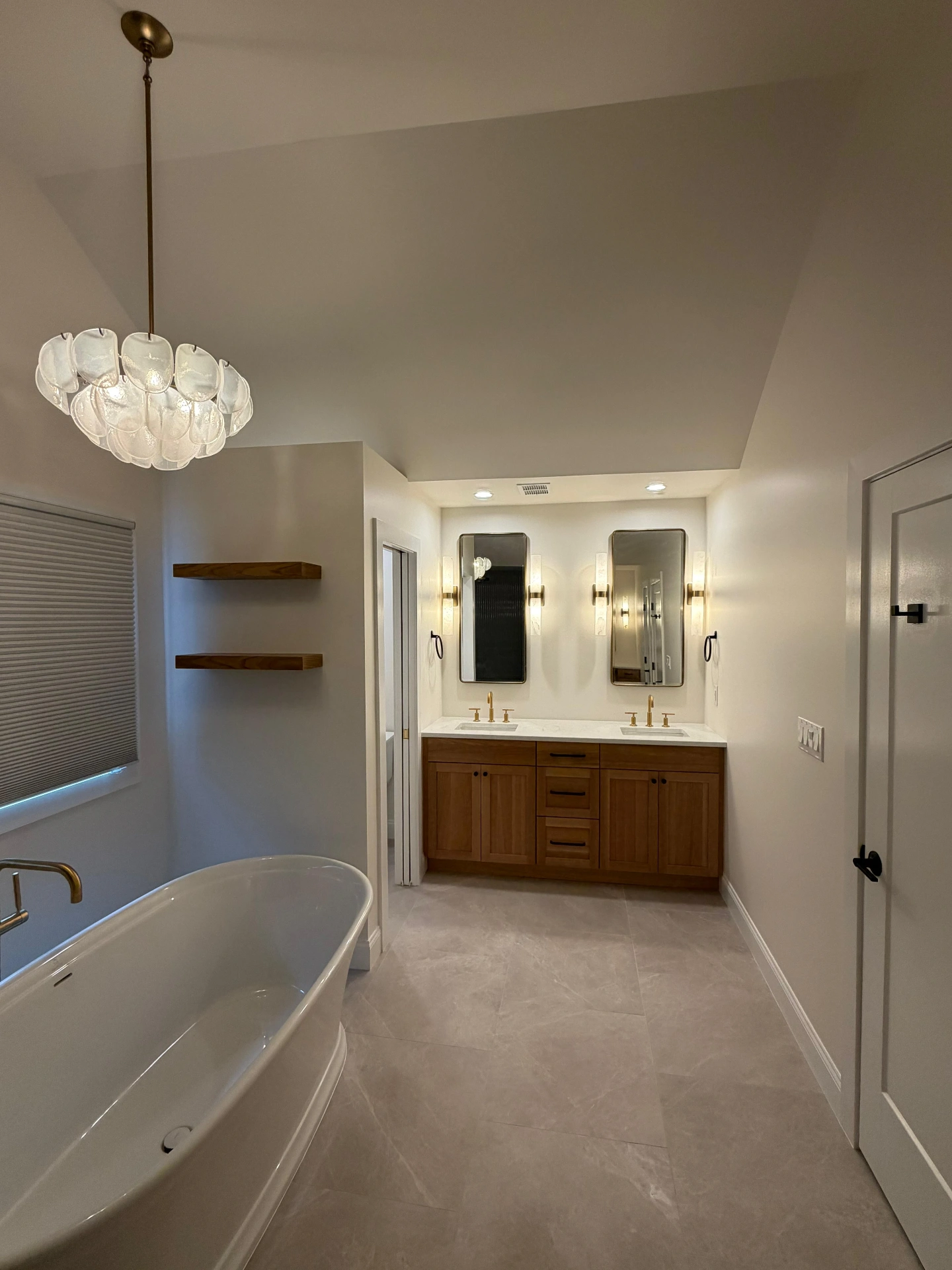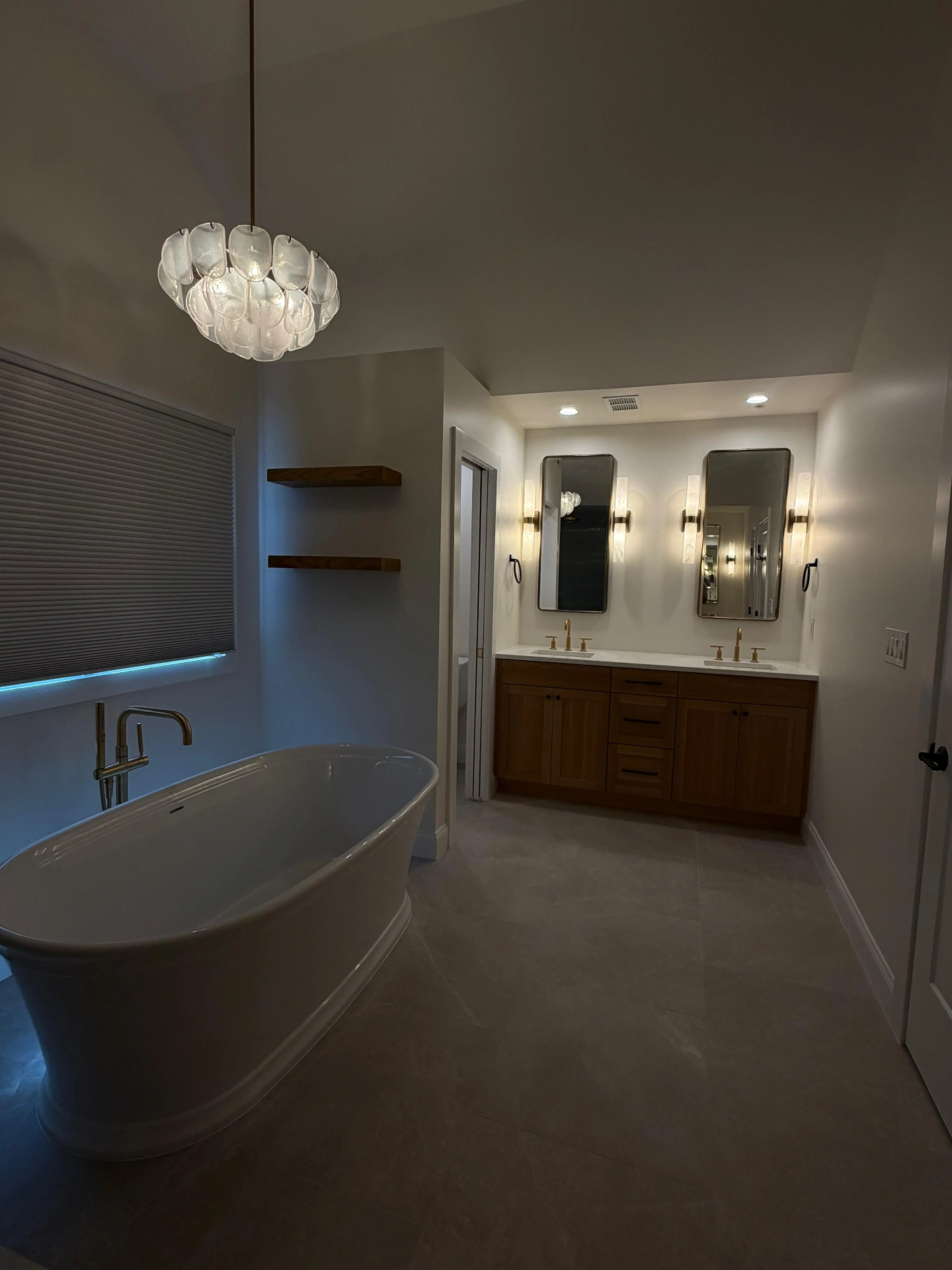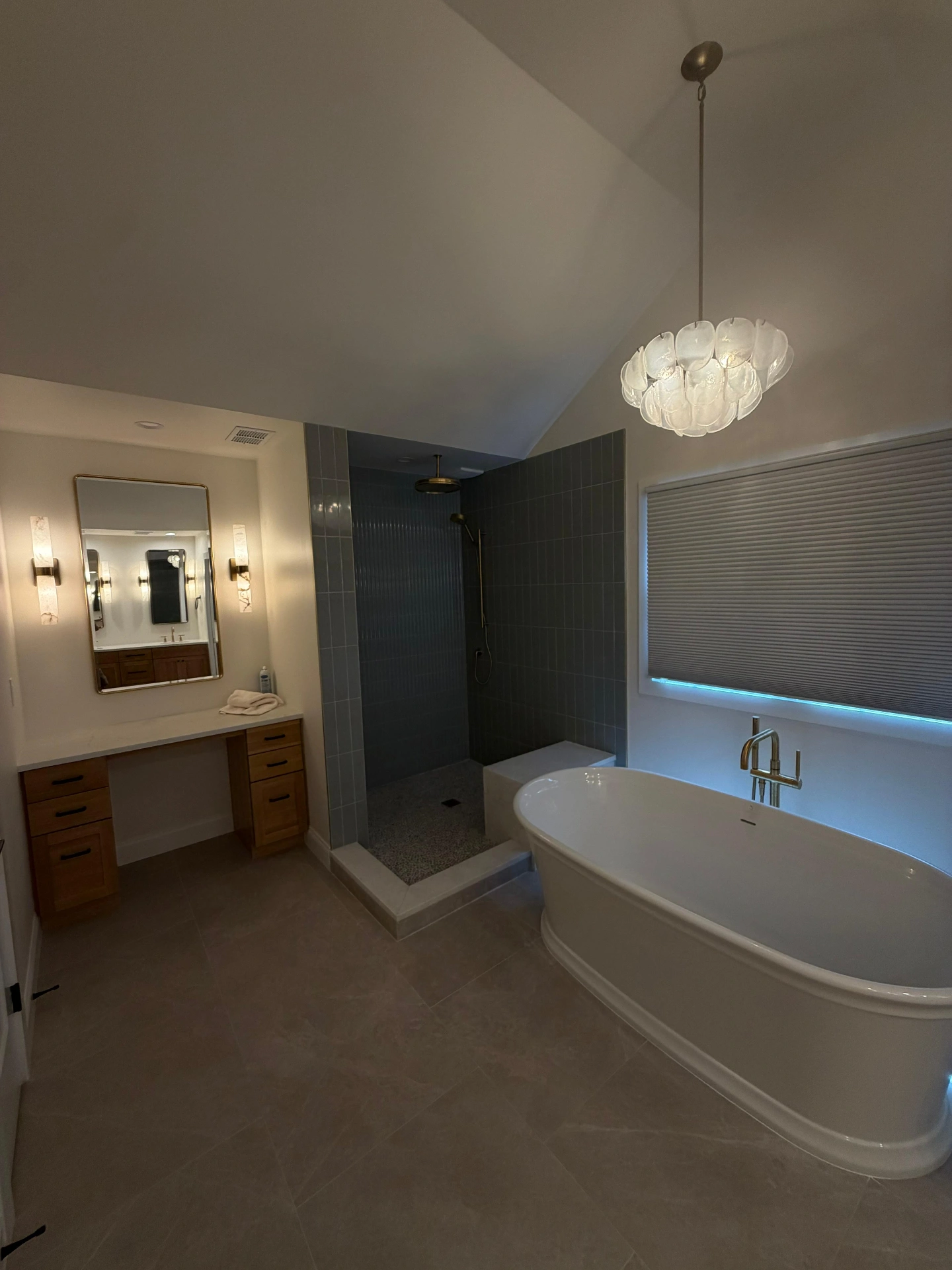
The bathroom is the smallest room in the house with the highest concentration of decisions per square foot. Tile, stone, plumbing fixtures, glass, lighting, ventilation, heated floors, niche placement, drain location, slope, waterproofing, vanity, mirror, hardware, paint. A 120 square foot master bath can carry as many specification decisions as a 300 square foot kitchen, and it is in those decisions that most renovations either land beautifully or end up with the door that does not close, the drain that puddles, the shower glass that streaks, and the towel bar that was installed an inch off.
This guide is the framework we use on every bath project from Greenville to Cherry Hill to Cape May. It covers what a real luxury bath costs in 2026, the small list of decisions that matter more than the rest, and the mistakes we have watched other contractors make repeatedly.
The honest cost range in 2026
A luxury master bathroom in our region in 2026 runs $55,000 to $135,000 for a typical 100 to 180 sqft footprint with a custom tile shower, freestanding tub, double vanity and premium fixtures. Larger spa baths with steam showers, custom millwork, heated floors and exotic stone push into the $150,000 to $260,000 range.
A powder room with high-end specifications, typically 25 to 45 sqft, runs $12,000 to $32,000. A guest hall bath in the $35,000 to $65,000 range delivers a serious upgrade without the master-suite price.
A small note on the wide ranges. Bathrooms have higher variance than kitchens because the room is small enough that one expensive material choice (a $400 per sqft slab on a vanity, a $14,000 freestanding tub) can move the total 20 percent without changing the room's footprint.
The five decisions that drive the budget
1. Shower vs tub vs both
The first and most important decision. In the last five years, the master bath conversation across our region has shifted from "always include a tub" to "include a tub only if someone in the house actually uses one, otherwise build a larger shower."
The honest math: a separate freestanding tub and walk-in shower consumes 40 to 60 sqft of floor area, requires two drains, two waterproofed assemblies, and adds $12,000 to $28,000 over a single oversized shower. If no one in the household has taken a bath in two years, the tub is decorative. If you are planning to sell within five years, keep at least one tub somewhere in the house for resale (a hall bath tub is fine).
A wet room (a curbless area that contains both tub and shower under a single glass enclosure) is the elegant middle ground. We build a lot of these. They are also the most demanding to waterproof correctly.
2. Tile and stone
A 100 sqft bath typically uses 200 to 280 sqft of tile (walls plus floor). Tile pricing in 2026:
- Standard porcelain: $4 to $10 per sqft
- Premium porcelain (large format, textured, marble-look): $12 to $28 per sqft
- Natural stone (marble, limestone, travertine): $18 to $80+ per sqft
- Glass mosaic and specialty: $25 to $200+ per sqft
The unsexy truth: a beautifully installed mid-tier porcelain looks more luxurious than a poorly installed marble. The labor difference between a competent tile setter and a great one is roughly 25 percent. The visual difference is roughly 200 percent. Pay for the great setter before you pay for the exotic tile.
3. Vanity and stone
Most projects use a custom or semi-custom vanity rather than a furniture-style purchased piece. The reason is fit. Bathrooms rarely have the inches to spare for a 60 inch vanity if the wall is 61 inches.
A typical premium vanity package, including cabinetry, stone top, sinks and faucets:
- Single vanity (36 to 48 inches): $4,500 to $11,000
- Double vanity (60 to 84 inches): $8,500 to $22,000
The stone top is half the cost. Quartz is the most practical and we use it more often than not. Honed marble is beautiful but will etch under everyday products. Quartzite is the compromise we like for clients who want a natural look without the maintenance.
4. Plumbing fixtures
The fixture spec is where most bathrooms either feel custom or feel catalog. Fixture pricing in 2026 is a wide range:
- Shower system (rain head, hand shower, body sprays, valve, trim): $1,800 to $9,000
- Tub filler (floor mount): $1,200 to $4,500
- Vanity faucet (per faucet): $300 to $1,800
- Toilet (one-piece, comfort height, soft-close, integrated bidet optional): $600 to $4,500
Brands worth specifying by name: Kohler, Brizo, Hansgrohe, Toto, Waterworks, Lefroy Brooks. Off-brand fixtures look fine on day one and feel cheap by year three.
5. Heated floor, steam, sauna
These are the upgrades buyers most often debate. Our honest take after installing all three many times:
- Heated floors: worth it. $1,800 to $5,000 installed for a typical master bath, lasts 30 plus years, and changes the daily experience of the room more than any other feature.
- Steam shower: worth it only if the household actually uses steam. The hardware adds $4,500 to $9,000, the construction (full vapor seal, sloped ceiling, isolated valve) adds another $3,000 to $6,000, and the generator needs annual maintenance.
- Sauna: niche. An infrared cabinet is a $4,000 to $12,000 luxury that some clients use weekly and others use twice. We will install one happily, but it is the first thing we suggest cutting if the budget needs trimming.
Waterproofing, the part nobody talks about and everybody pays for
A bath that leaks is the most expensive failure in residential construction. Water finds its way through tile, through grout, through poorly lapped membrane, through cement board joints that were not sealed.
A correctly built modern luxury shower uses a continuous waterproofing system (Schluter Kerdi, Wedi, or Laticrete Hydro Ban) bonded to a sloped pre-pan with a clamping drain and a curb that is wrapped, not just buttered. Total cost of the waterproofing system on a typical master shower: $1,500 to $3,200 in labor and materials.
A poorly built shower skips the membrane and relies on grout and a paper-faced backer board to keep water out. It looks identical for the first eighteen months. Then water gets behind the tile, finds the studs, and you are tearing out a $35,000 shower at year three.
This is the single most important question to ask any bath contractor: "Walk me through your shower waterproofing assembly." If the answer is not a real explanation involving a membrane brand and a clamping drain, find another contractor.
Timeline reality
A luxury master bath remodel in our region runs 8 to 14 weeks of active construction once materials are on site. Add 4 to 10 weeks before that for tile, stone, glass and fixture procurement. Total project timeline from contract to walkthrough: 3 to 5 months. Smaller bath remodels (powder rooms, hall baths) can finish in 5 to 8 weeks once materials are in.
The schedule risks are tile (slab selection takes weeks of dithering for most clients), custom glass (4 to 8 week lead time from template), and stone vanity tops (3 to 5 weeks from template). Order early.
What luxury actually looks like in a finished bath
It is the things you do not consciously notice. The shower niche is centered on a tile, not awkwardly between two cuts. The grout joints align between floor and shower wall. The towel bars are at 48 inches off the finished floor (not 36), so a full size bath towel hangs without folding. The mirror is sized to the vanity, not pulled off a shelf. The light fixtures sit at eye height, not above the mirror. The toilet paper holder is reachable from the seated position. The vanity has 28 inch knee space underneath because someone might sit at it. The medicine cabinet recesses into the wall, not surface-mounted like a hospital.
None of this is expensive. All of it is the difference between a beautiful bath and a great one.
The honest tradeoff with luxury bath investment
A $90,000 master bath in a $900,000 home typically recoups 50 to 65 percent at resale. A $35,000 hall bath remodel typically recoups 75 to 90 percent. The math favors the more modest renovation if you are renovating for resale.
If you are renovating for the next fifteen years of your own life, the master bath is the highest daily-use-per-dollar room in the house and the math is different. Most of our clients are renovating for themselves, and the resale conversation is secondary.
Picking the right contractor for a bath
A bath is a small project with a high concentration of trades, which means the contractor's organization matters more than usual. The same plumber, tile setter, electrician and glass installer need to overlap cleanly in 120 square feet over four weeks without stepping on each other. A contractor who does fifteen baths a year has the choreography down. A contractor who does two baths a year and twelve kitchens is going to fumble the sequence.
Ask any bath contractor: how many bathrooms have you completed this year, can I see two of them photographed, and can I call the homeowners. The answer should be unhesitating.
A1 Brothers builds master baths across Bucks, Montgomery, Camden and New Castle counties, and we have done dozens at the Jersey Shore and the Delaware beaches where salt and humidity make material selection unforgiving. If you would like to see how the framework in this guide applies to your space, the consultation is the right first step.
Frequently Asked Questions
Questions buyers actually ask
What is the average cost of a luxury master bathroom remodel in 2026?+
A luxury master bath in the PA suburbs, South Jersey or Delaware in 2026 typically runs $55,000 to $135,000 for a standard footprint. Larger spa baths with steam, heated floors and premium stone can run $150,000 to $260,000.
How long does a master bathroom remodel take?+
A luxury master bath remodel takes 8 to 14 weeks of active construction, plus 4 to 10 weeks of procurement for tile, stone and fixtures. Total timeline from contract signing to walkthrough is typically 3 to 5 months.
Are heated bathroom floors worth the cost?+
Yes, in almost every case. Heated floors add $1,800 to $5,000 to a typical master bath, last over 30 years, and meaningfully improve the daily experience of the room. It is the upgrade clients tell us they are most glad they did.
Should I remove the tub in my master bathroom?+
If no one in the house has taken a bath in the last two years, removing the tub in favor of a larger shower is usually the right call. Keep at least one tub somewhere in the house for resale value, but it does not have to be in the master suite.
What is the most important question to ask a bathroom contractor?+
Ask them to walk you through their shower waterproofing assembly. The answer should reference a continuous membrane system (Schluter Kerdi, Wedi or Hydro Ban) bonded to a sloped pan with a clamping drain. If the answer is vague, find another contractor.
Do bathroom remodels increase home value?+
Yes, but the ROI depends on the scope. A modest hall bath update recoups 75 to 90 percent at resale in our region. A luxury master bath typically recoups 50 to 65 percent. Resale ROI improves the more your finishes match comparable homes in the neighborhood rather than exceed them.
Written by
A1 Brothers
Founders and Lead Builders
Two brothers, twelve-plus years of luxury remodeling across the Pennsylvania suburbs, South Jersey, the Jersey Shore and Delaware. Every word in this library is written from the lived experience of running 300+ projects from concept to handover.
Family-operated · Licensed and insured
Planning your project
Ready to plan your project properly?
We will walk the space, talk through what you actually want, and give you an honest plan you can hold us to. No pressure, no scripts.
Get an estimate